Heirloom Rhubarb – Heritage Rhubarb Seeds
🌿 Heirloom Rhubarb – Heritage Rhubarb Seeds
Rhubarb is a traditional garden plant that has been grown in Europe for generations. These rhubarb seeds come from a special plant that has not simply been grown — it has traveled from one garden to another across generations.
This rhubarb once grew in my great-grandmother’s garden and was later moved to my own garden, where it continues to grow today.
This is a heirloom rhubarb line, preserved without hybridization. Not a catalog variety, but a living plant with its own story.
Suitable for those who want to grow a true, resilient rhubarb with character.
🕰 History and origin
Rhubarb first came to Europe as a medicinal plant and only later became a garden crop. It was valued not only for its taste but also for its practicality — it is one of the first plants to produce a harvest in spring.
This particular rhubarb is not tied to a named or commercial variety.
It is a plant that has traveled — from generation to generation, from garden to garden.
Over time, such plants adapt to their environment. They become more resilient, stable, and often more interesting than uniform commercial varieties.
This is an open-pollinated heirloom line, allowing you to collect seeds and continue its story.
🌿 Characteristics
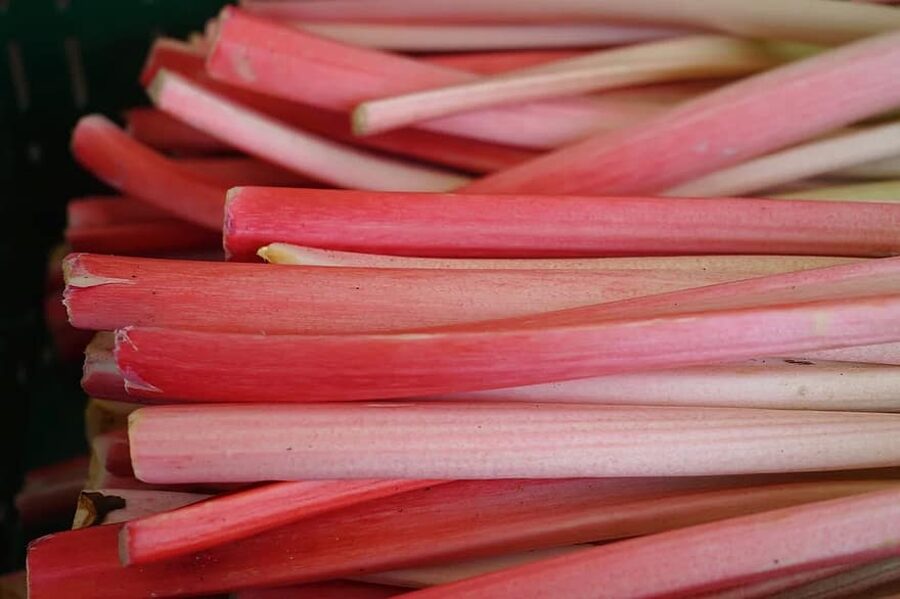
Rhubarb is a perennial, strong-growing plant with a striking presence in the garden. It forms large clumps with broad leaves and thick stalks.
It typically grows 60–120 cm tall and can spread up to a meter or more. It can remain in the same place for many years.
When grown from seed, each plant develops slightly differently. Stalk color, taste, and vigor may vary.
And sometimes — something special happens.
From seed, a plant may emerge with its own distinct qualities — in flavor, color, or resilience.
The chance is small, but it exists.
This is how new, unique rhubarb lines are created — ones that will exist only in your garden.
🍃 Flavor
This rhubarb has a classic, expressive taste — a unique flavor profile, where the acidity is lively, bright, and pleasant.
It is the kind of rhubarb often remembered from old gardens — full of character rather than mild.
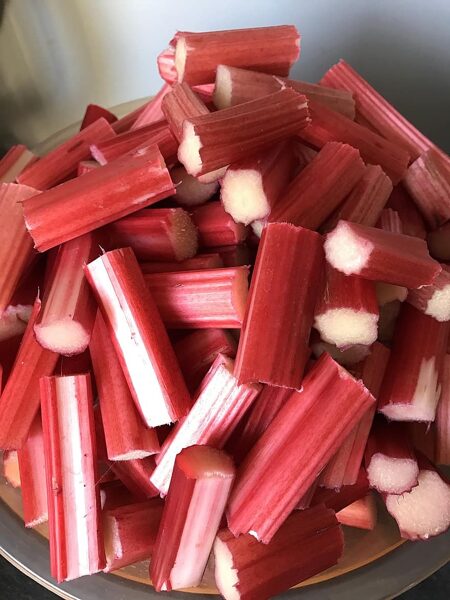
Especially suitable for jams, compotes, fermented drinks, desserts, chutneys, tray bakes, and cakes.
🍾 Champagne rhubarb
There is also a special way of growing rhubarb known as “champagne rhubarb”, producing exceptionally tender and delicate stalks.
This tradition comes from Great Britain, particularly from the Yorkshire region, where rhubarb is grown in darkness to achieve a very different result.
These stalks are:
- lighter, often with a soft pink tone
- more tender and juicy
- with a refined, rounded flavor
They are valued for their delicacy and nuanced taste.
Plants grown from these seeds can also be used for this method.
🌱 Rhubarb in the garden and everyday life
Rhubarb is one of those plants that lives in a garden longer than a season — often longer than a generation.
Historically, it was grown not only as food but also for medicinal use. The root was especially valued for aiding digestion.
In spring, it was one of the first fresh foods — with its tangy, refreshing taste and nutrients needed after winter.
Today it is mostly grown for its flavor, but this historical role remains part of its identity.
Rhubarb leaves are not edible.
🌱 Sowing and growing
Rhubarb can be grown from seed in both spring and autumn.
In Northern Europe: March–April
In warmer regions: earlier or in autumn
Sow seeds about 1–2 cm deep. Germination usually takes 1–3 weeks.
Young plants grow slowly at first but become strong and long-lived over time.
Full harvest is usually obtained from the second or third year.
🌞 Growing conditions and care
Rhubarb prefers deep, fertile soil and consistent moisture.
It grows best in full sun or light partial shade.
In Northern Europe, it grows well outdoors.
In warmer climates, some protection from heat is beneficial.
The most important thing — allow the plant to establish in the first year.
🌿 Companion planting
Rhubarb is a large, dominant plant, so its placement in the garden matters.
It grows well with plants that prefer similar conditions — rich soil and moisture. It can be combined with other larger perennials or crops that tolerate some shade.
Unsuitable companions are plants that prefer dry soil, have shallow roots, or require full sun.
It is best to give rhubarb its own space or plant it as a dominant feature.
🍽 Uses
Rhubarb is one of the plants that brings life back into the kitchen in spring.
It is used for:
- jams with a bright, tangy flavor
- refreshing compotes and fermented drinks
- desserts, tray bakes, and cakes
- savory chutneys
It pairs well with sweet and fruity flavors, especially berries, and often becomes the main flavor element.
✍️ Heart Garden Studio
Pack contains 5 seeds.