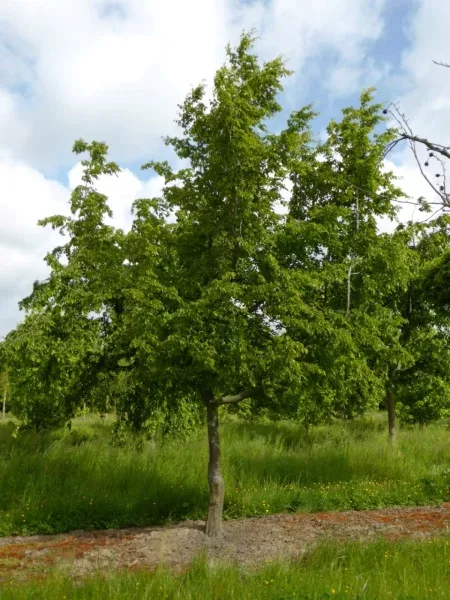
Horse Chestnut (Aesculus hippocastanum) – large, beautifully flowering tree seeds (chestnuts)
🌳 Horse Chestnut (Aesculus hippocastanum) – large, beautifully flowering tree seeds (chestnuts)
Horse chestnut — often simply called chestnut, and in the UK widely known as the conker tree — is one of those trees almost everyone recognizes. It becomes especially noticeable in spring, when tall white flowers bloom like candles across its branches. This is a tree with real presence: wide, strong, calm. A tree that may seem unremarkable in its first year, but over time grows into the heart of a place and a gathering point for family life.
In spring, the chestnut flowers generously, in summer it offers deep, cooling shade. In autumn, shiny brown conkers fall to the ground, hidden inside spiky green husks that look like little hedgehogs — a sight that brings back childhood memories for many. Horse chestnut is not a tree planted only for today. It is an investment in future generations, creating a place with a story.
🌱 About the horse chestnut tree
Horse chestnut (Aesculus hippocastanum) is a large deciduous tree that can reach 20–30 meters in height under good conditions. It forms a broad, dome-shaped crown and needs space to grow freely. This is a true park and avenue tree, meant for open landscapes rather than tight gardens.
Flowering usually happens in May, when the tree briefly becomes festive and eye-catching. The chestnut does not rush — it grows steadily and confidently, building a strong, long-lasting structure that stands for centuries.
Its lifespan often exceeds 200–300 years, which is why this tree has historically been planted with future generations in mind.
📜 A little history
The horse chestnut originally comes from the Balkan Peninsula. It reached European parks and gardens several centuries ago and quickly became a classic tree of manor gardens, city parks, and tree-lined avenues from the 17th–18th century onward.
It has never been a fashionable or trendy tree. On the contrary, the horse chestnut has always been chosen by people who value stability, longevity, and landscapes that carry history.
🌍 Growing horse chestnut from seeds in Europe
❄️ Northern Europe – Latvia, the Baltics, Scandinavia, and similar regions
Horse chestnut seeds are best sown in autumn, as soon as they are ripe. If the seeds have dried out, they should be soaked in water for up to 24 hours before planting, until they swell again. The chestnut “knows” what it needs — winter cold provides natural stratification and prepares the seeds for spring.
Chestnuts usually sprout in spring, sometimes slowly and unevenly, and occasionally only after a year. This is completely normal. The most important things are good drainage and protection from rodents. During germination and early growth, the soil must not dry out, as dryness can prevent successful sprouting.
☀️ Southern Europe and other hot-climate regions
In warmer climates, sowing also takes place in autumn or early winter. The main challenge for chestnut trees here is summer heat and drought. Young seedlings should be kept in partial shade and watered regularly until they are well established, as young leaves can burn easily in strong sun.
🌾 Soil – the foundation of healthy growth
Horse chestnut prefers deep, fertile, humus-rich soil with even moisture. It does not like dry, scorched ground, but it also struggles in areas where water collects and stands.
If the soil is heavy or very sandy, improving it at the start is highly recommended. A good beginning for roots means a stronger, healthier tree in the long run.
🌱 Seed sowing and the first years of growth
Chestnuts are sown 3–5 cm deep in lightly moist, peat-based substrate. During the first year, most of the tree’s energy goes into developing roots, so above-ground growth may appear slow and modest.
Because horse chestnut develops a deep root system, it does not like frequent repotting. Ideally, it should be grown in a large pot for 1–2 years and then transplanted to its permanent growing location.
💧 Caring for young horse chestnut trees
A young horse chestnut needs:
• regular moisture,
• protection from strong sunlight in the first years,
• mulching around the root zone (keeping mulch away from the trunk).
Once established, the tree becomes hardy, healthy, and stable, requiring less attention over time.
🌿 Horse chestnut in the garden
Horse chestnut is best suited for:
• large gardens,
• rural properties,
• parks and avenues.
In small spaces it quickly becomes too large, but where there is room to grow, it naturally becomes the backbone and focal point of the landscape.
⏳ When does horse chestnut start flowering?
A horse chestnut grown from seed usually begins to flower after 10–15 years. This is not a tree for the impatient, but for those who understand that growing and caring for a tree takes time.
✔️ Summary
Horse chestnut (Aesculus hippocastanum) is a classic, long-lived, and resilient tree that withstands storms and time. A choice for those who want to leave behind not just a garden, but a story grown from a single chestnut seed.
Seeds per pack: 3 pcs
Author: Heart Garden Studio